
Organic Waste Management Basics
Organic waste is a resource when it is kept clean and managed correctly. When it is mixed, dumped, burned, or left to rot without control, it becomes a source of pollution, greenhouse gas emissions, odour, pests, and public health risk.
Learn what organic waste is, how food and garden waste can be prevented or processed, which treatment method fits different situations, and what Indian waste rules require.
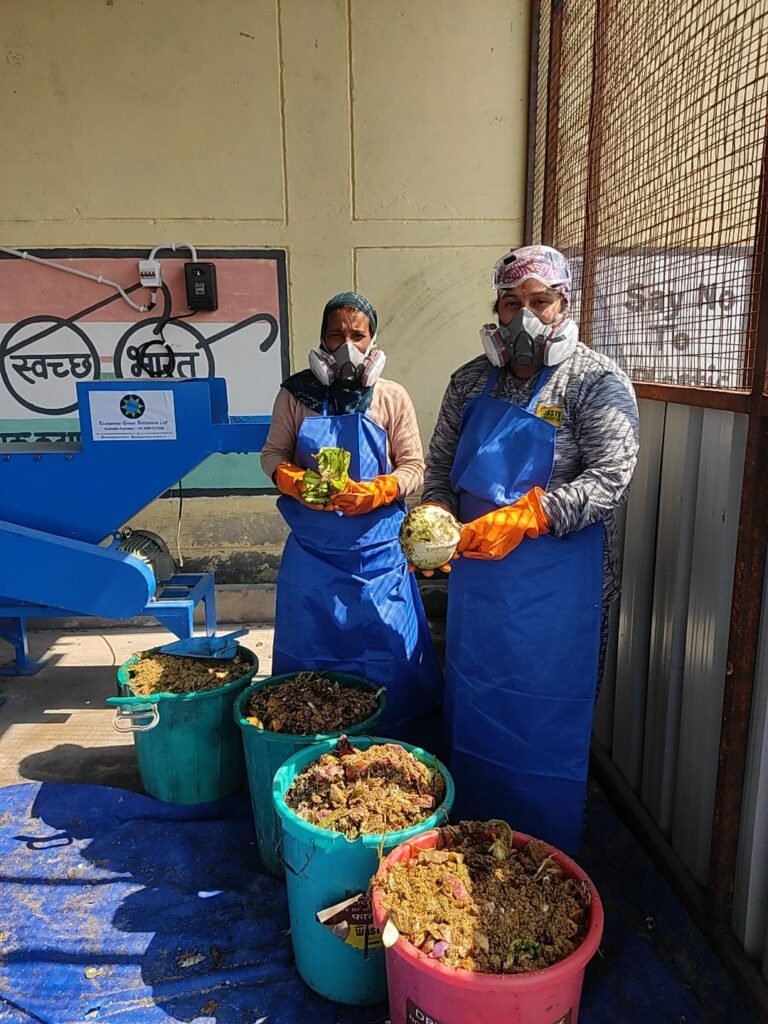
Purpose
This module explains what organic waste is, why it must be managed separately, how different treatment methods work, and what people and organisations in India are expected to do. The content is written for public learning and can be adapted into web pages, cards, frequently asked questions, or short training lessons.
A valuable resource, not just waste.
Organic food waste is the largest component of municipal solid waste in most Indian cities. When mixed with general waste and dumped in landfills or open dumps, it decomposes anaerobically and releases methane, a greenhouse gas more than 80 times more potent than carbon dioxide over a 20-year period. By processing food waste through composting and biogas systems, cities recover nutrients, reduce emissions, create livelihoods, and strengthen soil health.
What organic waste management looks like
A well-managed system keeps food and garden waste separate from other waste, processes it through suitable methods, and recovers nutrients and energy. It reduces emissions, keeps communities cleaner, and supports healthier soils and local economies.
The global challenge
Food waste is a major environmental and economic problem worldwide. Reducing and processing organic waste can make a big difference.
Why organic waste must be processed
Managing organic waste properly helps people, cities and the environment.
Read More
Climate Action
Diverting organic waste from landfill helps reduce methane emissions.
Soil Restoration
Compost improves soil organic carbon, water retention, microbial activity, and crop productivity.
Renewable Energy
Anaerobic digestion converts food waste into biogas for cooking, heating, and electricity generation.
Circular Economy
Organic waste becomes compost, bio-slurry, and green jobs instead of pollution.
Public Health
Proper processing reduces odour, flies, rodents, leachate, and open burning.
The Indian context
India generates more than 160,000 tonnes of municipal solid waste every day, and approximately 50–60% of this waste is biodegradable. Most cities still rely heavily on centralized collection and disposal, resulting in large quantities of organic waste reaching dumpsites. Mixed waste increases transportation costs, contaminates recyclable materials, and reduces the value of compost.
Key challenges in India
- Low source segregation of wet and dry waste
- Rapid urbanization and increasing food consumption
- High dependence on open dumps and legacy landfills
- Rising municipal expenditure on waste transportation
- Loss of valuable nutrients that could support sustainable agriculture
The Himalayan context
The Indian Himalayan Region presents a unique waste management challenge. Mountain towns have fragile ecosystems, steep terrain, scattered settlements, and seasonal tourism. Transporting waste over long distances is expensive and often environmentally damaging. Organic waste processing is therefore not only an environmental solution but also a climate-resilience strategy.
Why the Himalayas need local processing
- Tourism significantly increases food waste during peak seasons.
- Hill roads make transporting wet waste costly and carbon intensive.
- Open dumping contaminates rivers, springs, and downstream water sources.
- Organic waste attracts wildlife and increases human–wildlife conflict near forest edges.
- Organic waste attracts wildlife and increases human–wildlife conflict near forest edges.
The United Nations Sustainable Development Goal 12.3 calls for halving global food waste by 2030. Achieving this target requires cities, institutions, businesses, and households to segregate and process organic waste at source rather than treating it as garbage.
What is organic waste
Organic waste is material that comes from plants, animals, or other living sources and can be broken down by microorganisms under suitable conditions. Common examples include vegetable peels, leftover food, fruit waste, flowers, grass, dry leaves, crop residues, and some food processing by products.
In everyday municipal waste systems, organic waste is often called wet waste or biodegradable waste. These terms overlap, but they are not always identical. Correct identification matters because different materials need different collection and treatment methods.
Read More
| Term | Meaning | Important distinction |
|---|---|---|
|
Organic waste
|
Material of plant or animal origin that can decompose biologically. | Includes food waste, garden waste, crop residues, and similar materials. |
|
Food waste
|
Edible or inedible food related material removed from the human food chain at households, shops, kitchens, restaurants, or institutions. | Food waste is one part of organic waste. |
|
Wet waste
|
The term used in India for organic and biodegradable household or commercial waste such as kitchen waste, food, vegetables, fruit, meat, and flowers. | The Solid Waste Management Rules 2026 use this as a legal waste stream. |
|
Biodegradable waste
|
Material that microorganisms can break down into simpler and more stable substances. | A product labelled biodegradable is not automatically suitable for a home or community compost system. |
|
Compostable material
|
Material that can break down under defined composting conditions and produce stable compost without harmful residue. | Acceptance depends on the facility and its process. Packaging should never be added unless the processor confirms it is accepted. |
Types of organic waste
Organic waste comes from many sources, from kitchens and markets to gardens, farms, and food processing units. Each type behaves differently, so knowing what you’re dealing with is the first step to handling it safely and treating it effectively.
Read More
| Type | Examples | Management note |
|---|---|---|
|
Kitchen waste
|
Peels, cuttings, tea leaves, coffee grounds, eggshells, spoiled ingredients, and cooking scraps | Segregate at the point of generation. Drain excess liquid before storage. |
|
Cooked food waste
|
Rice, roti, dal, vegetables, dairy food, meat, fish, bones, and plate leftovers | Highly putrescible. Store briefly and process quickly. Meat, fish, and dairy need controlled systems. |
|
Fruit and vegetable market waste
|
Damaged produce, trimmings, stalks, leaves, and rejected fruits or vegetables | Often has high moisture and can be processed through composting or biomethanation after removing packaging. |
|
Garden and horticulture waste
|
Grass, weeds, dry leaves, twigs, branches, flowers, and pruning waste | Separate soft green material from woody material. Shredding improves handling. Dry leaves are a useful carbon source. |
|
Agricultural residues
|
Straw, husk, crop stalks, rejected produce, and farm residues | The correct use depends on the crop, contamination, scale, and local agricultural guidance. |
|
Food processing residues
|
Fruit pulp, spent grain, vegetable trimmings, dairy residues, and other production by products | Characterise the material before treatment because acidity, salt, fat, or cleaning chemicals can affect the process. |
|
Animal manure
|
Dung and bedding from livestock or poultry | Requires separate hygiene, odour, runoff, and pathogen controls. It may be composted or digested in a properly designed system. |
|
Natural fibres and untreated plant material
|
Uncoated paper tissue, sawdust, wood shavings, and plain cardboard in limited quantities | Use only clean material without plastic lining, chemicals, paint, or heavy ink. Local facility rules apply. |
What is not organic waste
The following materials must not be placed in an organic waste container unless a qualified facility specifically accepts them:
- Plastic bags, multilayer packaging, foil, glass, metal, and rubber
- Sanitary pads, diapers, condoms, bandages, and other sanitary waste
- Medicines, batteries, bulbs, paint containers, chemicals, and special care waste
- Biomedical waste, sharps, and contaminated clinical material
- E waste, construction waste, ash, cigarette butts, and sweeping dust
- Treated or painted wood and paper with plastic or wax coating
- Packaging described as biodegradable or compostable unless the receiving facility confirms that it can process that exact material
Why organic waste management is needed
Good management reduces waste, pollution, health risks, and resource loss while creating useful outputs.
Read More
It prevents avoidable waste.
Planning, correct storage, suitable portions, and redistribution reduce the amount of edible food discarded.
It protects soil and water.
Controlled collection and treatment reduce litter, leachate, drain blockage, and contamination of land and water bodies.
It reduces climate pollution.
Food and other organic material can generate methane when they decompose without oxygen in dumps or landfills.
It protects public health
Timely collection and covered storage reduce exposure to decaying waste, insects, rodents, stray animals, and contaminated runoff.
It saves disposal capacity.
Diverting organic waste reduces the quantity and weight sent to disposal sites.
It returns nutrients to productive use.
Well managed compost can improve soil organic matter and water retention. Anaerobic digestion can produce biogas and a nutrient rich digestate that requires appropriate treatment and use.
It improves working conditions.
Clean segregation reduces manual sorting, contact with hazardous items, odour, and injury risks for collection and processing workers.
It supports accountability.
Measuring generation, prevention, collection, processing, rejects, and final product use helps the public and institutions judge whether a system is actually working.
Waste hierarchy
The waste hierarchy sets the order of preference. Prevent waste first. Keep safe surplus food in the human food chain. Use suitable by products responsibly. Process unavoidable organic waste through composting or anaerobic digestion. Disposal is the last option. India’s Solid Waste Management Rules 2026 also define the hierarchy as prevention, reduction, reuse, recycling, recovery, and disposal. [1]
Segregation at source
Segregation at source means separating waste where it is produced, before different materials are mixed. A clean organic stream creates better compost or digestate, reduces sorting costs, limits worker exposure, and lowers the quantity rejected from a facility. Once glass fragments, sanitary waste, batteries, or plastic pieces enter wet waste, removing them completely is difficult.
Aerobic and anaerobic decomposition
Organic waste breaks down differently depending on whether oxygen is present. Understanding the difference helps you tell useful treatment apart from harmful pollution.
Read More
| Process | Conditions | Main outputs | Typical use |
|---|---|---|---|
|
Aerobic composting
|
Microorganisms decompose organic material in the presence of oxygen. | Heat, water vapour, carbon dioxide, and stable compost | Homes, communities, institutions, farms, and central facilities |
|
Anaerobic digestion
|
Microorganisms decompose organic material in a sealed system without oxygen. | Biogas and digestate | Sites with a regular supply of suitable wet feedstock and trained operation |
|
Uncontrolled anaerobic decay
|
Mixed organic waste decomposes without adequate oxygen in dumps, drains, or compacted piles. | Methane, leachate, odour, and unstable residue | This is pollution and must not be confused with controlled anaerobic digestion |
Balance of carbon and nitrogen
Food scraps and fresh green material are generally rich in nitrogen and moisture. Dry leaves, shredded plain cardboard, straw, and wood chips are richer in carbon and help absorb moisture and maintain pore space. A starting carbon to nitrogen ratio near 30 to 1 is commonly recommended for managed composting, although the correct mix depends on the materials and how available their carbon and nitrogen are. [5]
Moisture oxygen particle size and temperature
Microorganisms need moisture and oxygen. Compost that is too dry decomposes slowly. Compost that is too wet becomes compacted, loses oxygen, and may smell. Moisture around 50 to 60 percent is commonly suitable for composting. A practical field check is that the mixture should feel like a wrung sponge rather than dripping water. Smaller pieces decompose faster, but material chopped too finely can compact and block airflow. [6]
Active composting produces heat. Managed systems use temperature records, mixing, airflow, and moisture control to maintain biological activity and reduce pathogens. Very high temperatures can also suppress beneficial organisms. The process must be followed by curing, when the material cools and becomes more stable. [6][7]
Curing and maturity
Curing is not optional. Freshly processed material may still consume oxygen, release odour, generate heat, or harm plants. Mature compost has a stable temperature close to ambient conditions, an earthy smell, a crumbly texture, and little recognition of the original feedstock. Appearance alone is not proof of quality. Compost intended for sale or wider use must meet the applicable quality and testing requirements.
Measurement and mass balance
A credible system records how much waste is generated, prevented, collected, processed, rejected, and converted into useful outputs. A simple mass balance compares total input with compost, digestate, biogas, rejects, moisture loss, and material still under processing. Unexplained gaps indicate weak weighing, poor records, leakage, or incorrect claims.
Solutions and management methods
Preferred order of actions
- 1. Measure what is being wasted and why
- 2. Prevent over purchasing overproduction spoilage and oversized portions
- 3. Redistribute safe surplus food through a compliant system
- 4. Use safe by products for human food or another approved beneficial purpose
- 5. Process unavoidable organic waste through a suitable biological method
- 6. Use compost digestate and biogas safely and productively
- 7. Send only unavoidable rejects and residue to the authorised disposal route
Comparison of common methods
There’s no single best way to manage organic waste. The right method depends on how much you generate, what type it is, and the space and resources you have. Compare the most common approaches, from prevention to composting and biogas, to see which fits your situation.
Read More
| Method | Best suited to | Main benefit | Main requirement or limitation |
|---|---|---|---|
|
Food waste prevention
|
Every generator | Avoids cost and environmental impact before waste is created | Needs measurement, planning, storage control, and staff or household participation |
|
Surplus food redistribution
|
Hotels, caterers, institutions, retailers, and events with safe unserved food | Keeps edible food in the human food chain | Food safety, shelf life, traceability, clean transport, and compliant partners are essential |
|
Home composting
|
Small quantities of segregated plant based kitchen and garden waste | Low transport need and local compost use | Needs regular balancing with dry material and household attention |
|
Community composting
|
Apartments, neighbourhoods, markets, and small institutions | Shared local processing and visible community participation | Needs a responsible operator, space, daily records, odour control, and a use for compost |
|
Windrow or aerated pile composting
|
Larger quantities of garden and mixed organic waste | Flexible scale and relatively simple equipment | Needs land, drainage, turning or aeration, weather protection, and leachate control |
|
In vessel composting
|
Space constrained or higher volume sites requiring controlled conditions | Can improve containment and process control | Higher capital, energy, maintenance, and operator skill; output still needs curing |
|
Vermicomposting
|
Partly decomposed and well balanced organic material | Produces a useful soil amendment under mild conditions | Earthworms are sensitive to heat, excess moisture, acidity, salt, oil, and fresh putrescible feed |
|
Anaerobic digestion
|
Regular volumes of pumpable or prepared wet organic feedstock | Produces biogas and digestate | Needs reliable feed, technical operation, gas safety, digestate management, and financial viability |
|
Centralised processing
|
Areas where local treatment is not practical | Can support professional operation and larger capacity | Requires clean collection, covered transport, transfer planning, and strong monitoring |
Basic composting process
Composting is managed decomposition in the presence of oxygen. It works when clean organic inputs are combined with enough carbon rich material, moisture, structure, air, and time. The method can use bins, drums, racks, piles, windrows, aerated systems, or enclosed vessels, but the biological needs remain similar. [6]
Read More
step 1
Measure what is being wasted and why
Step 2
Keep organic waste separate from plastic, glass, sanitary waste, chemicals, and other contaminants.
Step 3
Reduce large pieces to a practical size without turning the mix into a dense paste.
Step 4
Mix wet nitrogen rich material with dry carbon rich material such as dry leaves or clean shredded plain cardboard.
Step 5
Maintain moisture similar to a wrung sponge. Add dry material if the mix is soggy and water if it is too dry.
Step 6
Provide air through turning, perforations, bulking material, pipes, or forced aeration according to the system design.
Step 7
Record input weight, temperature, odour, moisture, corrective actions, and rejects.
Step 8
Allow the active phase to finish, then cure the material until it is stable and suitable for its intended use.
Step 9
Screen only when appropriate. Return oversized clean material to the process and send contamination to the correct route.
Step 10
Test compost where required and use or market it only for suitable applications.
Compost troubleshooting
Most compost problems show clear warning signs and are easy to fix once you know the cause. Use this guide to spot the issue and get your system back on track.
Read More
| Observation | Likely cause | Corrective action |
|---|---|---|
|
Rotten or sour odour
|
Too wet, compacted, excess food waste, or poor airflow | Stop adding wet feed briefly, add dry carbon material, loosen the mix, improve drainage, and restore aeration. |
|
Strong ammonia smell
|
Too much nitrogen rich material or poor carbon balance | Add and mix dry carbon rich material. Review the feeding ratio. |
|
Pile does not heat
|
Too small, too dry, low nitrogen, cold conditions, or inactive material | Check moisture, mix in suitable fresh green material, increase active volume, and protect the system from weather. |
|
Pile is excessively hot
|
Very active mix, too much nitrogen, or insufficient heat release | Turn or aerate, add structural carbon material, and monitor until the temperature returns to the operating range. |
|
Maggots or flies
|
Fresh food exposed, slow covering, or gaps in the container | Cover every feed with dry material or active compost, improve lids and screens, clean spills, and reduce storage time. |
|
Rodents or animals
|
Accessible cooked food or uncovered feed | Use secure containers, remove spilled waste, repair gaps, and use a system suitable for the feedstock. |
|
Wet leachate
|
Excess liquid, rain entry, weak drainage, or overloaded system | Divert rain, drain inputs, add dry material, reduce feed, and collect any liquid safely. Do not discharge it into drains or soil. |
|
Finished material harms plants
|
Compost is immature, salty, contaminated, or incorrectly applied | Extend curing, test the material, identify contamination, and use only at an appropriate rate and application. |
Actions for different waste generators
Everyone who generates organic waste has a role to play. Here are practical steps for households, food businesses, institutions, and local bodies to reduce, segregate, and manage waste responsibly.
Read More
Households
- Plan meals and shopping. Store food correctly and use older items first.
- Keep wet waste separate from dry, sanitary, and special care waste.
- Use a covered washable container and hand waste over at the notified time.
- Compost at home only if space, time, and a suitable use for compost are available.
- Never put batteries, glass, blades, medicines, diapers, or plastic packaging into the organic stream.
- Never throw waste into drains, water bodies, streets, forests, or open land. Never burn it.
Restaurants hotels canteens and caterers
- Measure preparation waste, spoilage, unserved surplus, and plate waste separately.
- Link purchasing and menu planning to actual demand. Review buffet quantities and portion sizes.
- Create clearly marked collection points in preparation, cooking, serving, and dishwashing areas.
- Train all shifts and contractors. Display photographs of accepted and rejected material near bins.
- Keep safe surplus food separate from waste and follow FSSAI requirements for donation.
- Store unavoidable food waste in covered washable containers and remove it frequently.
- Use an authorised collector or operate an approved on site system with daily records, odour control, pest control, drainage, and safe output use.
Institutions apartments and bulk generators
- Complete a representative waste audit before deciding capacity or technology.
- Assign an accountable manager and trained operator. Define backup arrangements for leave, breakdowns, and peak generation.
- Provide enough correctly located containers and collect each stream separately.
- Procure equipment only after checking feedstock suitability, actual throughput, utilities, staffing, maintenance, space, curing, reject management, and output use.
- Track daily generation, processed quantity, downtime, additives, electricity, water, rejects, odour complaints, compost or digestate, and destination.
- Maintain worker safety, hygiene, fire and gas safety where applicable, and a complaint response process.
- Check whether the premises meets the legal definition of a Bulk Waste Generator and complete registration and reporting requirements.
Local bodies and service providers
- Provide clear four stream segregation instructions and a reliable collection schedule.
- Do not remix segregated waste during collection or transport.
- Map waste generators, seasonal variation, routes, processing capacity, and end users before investing in infrastructure.
- Register facilities and operators as required and monitor inputs, outputs, rejects, environmental controls, and complaints.
- Support decentralised processing where it is safe and viable, while providing central capacity for areas that cannot process locally.
- Include waste workers and self help groups through fair contracts, training, protective equipment, safe working conditions, and timely payment.
- Publish performance information in a form the public can understand.
How to select a treatment system
A technology is suitable only when it matches the waste, site, operator, and market for outputs. Review the following before purchase or construction:
Read More
Waste quantity
What is the average and peak daily weight? How much changes by season, weekday, tourism, or events?
Waste quality
What proportion is food, garden waste, cooked food, meat, liquid, packaging, and contamination?
Prevention potential
How much edible food can be prevented or safely redistributed before sizing treatment?
Site
Is there enough space for receiving, processing, curing, storage, drainage, vehicle access, buffer, and future growth?
Utilities
Are electricity, water, ventilation, drainage, and backup power adequate and reliable?
People
Who will operate the system every day? What training, supervision, protective equipment, and backup staffing are required?
Outputs
Who will use compost, digestate, or biogas? What quality, testing, storage, packaging, and transport are needed?
Residuals
Where will contaminants, rejects, wastewater, and breakdown material go?
Costs
What are the full capital, civil work, manpower, electricity, water, additives, repairs, testing, transport, and replacement costs?
Compliance
Which local body, pollution control board, food safety, fire, building, labour, and other approvals apply?
Evidence
Has the technology been verified at a similar scale with similar feedstock and climate? Are performance claims based on measured input and stable output?
Safety and good operating practice
- Keep reception and processing areas clean, drained, ventilated, and protected from rain.
- Use washable covered containers. Clean them on a defined schedule without allowing wash water to enter storm drains.
- Use washable covered containers. Clean them on a defined schedule without allowing wash water to enter storm drains.
- Provide gloves, closed footwear, work clothing, eye protection, masks or respiratory protection when the task assessment requires them, and access to handwashing.
- Provide gloves, closed footwear, work clothing, eye protection, masks or respiratory protection when the task assessment requires them, and access to handwashing.
- Prohibit eating, drinking, and smoking in waste handling areas.
- Keep first aid, incident reporting, vaccination advice, and medical support available for workers.
- Use machine guards, lockout procedures, and trained operators for shredders, mixers, conveyors, and other equipment.
- Treat enclosed tanks, pits, digesters, and gas spaces as high risk. Entry and maintenance require specialised confined space and gas safety controls.
Regulation and compliance
Regulation and compliance in India
Solid Waste Management Rules 2026
The Solid Waste Management Rules 2026 were notified by the Ministry of Environment Forest and Climate Change and came into force on 1 April 2026, replacing the Solid Waste Management Rules 2016. They apply to urban and rural local bodies and to household, institutional, commercial, and other non residential solid waste generators within their scope. [1][2]
Four stream segregation
Every waste generator must segregate and store waste at source in four streams and hand it over as directed by the local authority. [1][2]
Read More
| Stream | Examples |
|---|---|
|
Wet waste
|
Kitchen waste, food waste, vegetables, fruit, meat, flowers, and similar biodegradable waste |
|
Dry waste
|
Recyclable and non recyclable material other than wet, sanitary, and special care waste |
|
Sanitary waste
|
Used diapers, sanitary pads, tampons, condoms, and similar items, securely wrapped |
|
Special care waste
|
Paint containers, bulbs, mercury thermometers, medicines, and other notified household special care items |
Duties of every waste generator
- Take measures to prevent or reduce pollution caused by solid waste.
- Segregate wet, dry, sanitary, and special care waste at source.
- Hand segregated waste to authorised waste pickers or collectors as directed by the local authority.
- Store garden and horticulture waste separately and follow local directions for its disposal.
- Do not throw, burn, or bury waste on streets or open public spaces, and do not put it into drains or water bodies.
- Pay the user fee specified in local bye laws.
- Follow additional requirements for events, street vending, biomedical waste, and other specific activities where applicable.
Gated communities institutions hotels and restaurants
The 2026 Rules require gated communities and institutions with more than 5000 square metres of area, all resident welfare associations, market associations, hotels, and restaurants to ensure source segregation and separate collection in partnership with the local body. Recyclables must go to authorised waste pickers or recyclers. Biodegradable waste must be processed through composting or biomethanation within the premises as far as possible, and residual waste must go to the collector or agency directed by the local body. [2]
Bulk Waste Generators
Under the 2026 Rules, an entity is a Bulk Waste Generator if it meets at least one of these thresholds: a floor area of 20000 square metres or more, water consumption of 40000 litres per day or more, or solid waste generation of 100 kilograms per day or more. The definition covers specified institutional, commercial, and residential premises. [1][2]
Read More
Key duties include:
- Register with the concerned local body through the centralised online portal.
- Arrange separate management of dry, sanitary, and special care waste through the local body or its authorised agency.
- Collect and process wet waste and applicable horticulture waste through composting, biomethanation, or another approved technology.
- For new Bulk Waste Generators, establish adequate wet waste processing capacity. Existing generators unable to do so must obtain the required local body exemption and Extended Bulk Waste Generator Responsibility certificates.
- Use registered entities and maintain traceable records.
- Submit annual returns by 30 June through the centralised online portal as applicable.
- Hand processing residue or inert material to the authorised collection route.
Waste processing facilities
Operators of wet waste, composting, biogas, and other solid waste processing facilities must meet registration and authorisation requirements, follow applicable technical guidance and standards, operate without harming health or the environment, use trained manpower, manage residue safely, and file the required returns. Biomethanation and biogas plants must also meet the applicable GOBARDHAN portal linkage requirements. [2]
Surplus food donation
The Food Safety and Standards Recovery and Distribution of Surplus Food Regulations 2019 govern safe donation and free distribution of surplus food. Food businesses must not donate unsafe food and must hand surplus food over early enough for consumption within its shelf life. Distribution organisations must use reliable licensed or registered sources, maintain suitable transport, storage, and reheating arrangements, follow hygiene requirements, label donated food correctly, and maintain records. Food that is not fit for human consumption must be clearly identified for disposal. [9]
Compliance checklist
- Confirm the latest local bye laws, user fees, collection instructions, permissions, and reporting formats.
- Review compliance at least annually and whenever the waste quantity, process, law, or local instruction changes.
- Provide four stream segregation and prevent mixing during collection or storage.
- Use only authorised collectors, recyclers, and processors where required.
- Maintain daily input, processing, output, reject, and destination records.
- Obtain registration, authorisation, consent, fire, building, food safety, or other approvals that apply to the specific site and technology.
- Meet compost or digestate quality standards before sale or unrestricted use.
- Maintain worker safety, environmental controls, complaint records, and corrective actions.
- Review compliance at least annually and whenever the waste quantity, process, law, or local instruction changes.
Legal note This section is a public information summary updated in September 2026. It is not a substitute for the Gazette notification, CPCB guidance, State Pollution Control Board directions, local bye laws, or professional legal and technical advice. Requirements can vary by location and facility.
Common myths
Many popular beliefs about organic waste sound right but lead to poor results. Here’s what actually holds true, so you can avoid common mistakes.
Read More
| Myth | What is correct |
|---|---|
| All organic waste will disappear naturally | Decomposition still creates pollution when waste is dumped, submerged, compacted, or mixed with hazardous material. Management must be controlled. |
| A green bin automatically means segregation | Segregation is about the material inside the container, consistent behaviour, separate collection, and correct treatment. |
| Any machine can solve a wet waste problem | A machine is only one part of a system. Feedstock quality, operator skill, utilities, maintenance, curing, output use, and residue management determine performance. |
| A 24 hour output is finished compost | Grinding, heating, or drying can reduce volume, but stable compost requires biological decomposition and curing. A rapid output should be tested and handled according to its actual maturity. |
| Bad smell is normal | Persistent strong odour usually signals excess moisture, poor aeration, exposed feed, overloading, leachate, or weak housekeeping. |
| Biodegradable packaging belongs in every compost bin | Many products need industrial conditions or do not break down as expected. Add them only when the receiving process has approved them. |
| Burning garden waste is harmless | Open burning creates smoke and air pollution and is prohibited under the waste generator duties in the 2026 Rules. |
FAQ
Everything You Need to Know
Find quick answers to common questions about compost odour, airflow, moisture, and corrective actions.
Yes, but cooked food decomposes quickly and can attract pests. It should be handled in a covered, well managed system with enough dry carbon material. Meat, fish, dairy, oily food, and large bones are better handled in systems designed for them.
Odour usually develops when waste is stored too long or when a compost mix is too wet, compacted, or short of oxygen. Faster collection, dry carbon material, drainage, and aeration address the cause. |
Dry leaves are a useful carbon source for composting and mulching. They should be stored clean and dry rather than burned or mixed with plastic.
A reusable washable container is preferable where the collection system allows it. If a liner is used, the processor must remove it. Conventional plastic must never be processed with organic waste. |
No. Compost should cure until it is stable. Immature material can smell, consume oxygen, reheat, or harm plants. |
Neither method is universally better. Biomethanation can recover energy from regular wet feedstock, while composting can suit mixed food and garden material. The correct choice depends on quantity, composition, site, skills, utilities, cost, and use of outputs. |
Prevent excess first. If safe surplus remains, keep it separate from waste and use a food donation route that complies with FSSAI requirements.
Record the date, place, and service details and report the issue through the local body grievance mechanism. Continue segregating and request a corrective response from the service provider. |
Complete a waste audit covering weight, composition, location, timing, contamination, seasonality, existing cost, and current destination. Use the evidence to design prevention, collection, processing, staffing, and monitoring. |
Need Help Planning the Market?
Need More Guidance?
If you need help with pricing, product positioning, buyer outreach, trials, or long-term demand planning, the project may need a closer market and business review.
Key Terms
| Term | Plain language meaning |
|---|---|
| Aeration | Supplying air to compost so aerobic microorganisms can work. |
| Anaerobic digestion | Controlled biological breakdown without oxygen in a sealed reactor. |
| Biogas | Gas from anaerobic digestion that contains methane and carbon dioxide and can be used for energy after suitable treatment. |
| Bulk Waste Generator | An entity meeting at least one threshold defined in the Solid Waste Management Rules 2026. |
| Carbon rich material | Dry material such as leaves, straw, wood chips, or clean plain cardboard that helps balance wet nitrogen rich feedstock. |
| Compost | A biologically stable soil amendment made through managed aerobic decomposition. |
| Contamination | Material present in a waste stream that does not belong there or makes processing unsafe or difficult. |
| Curing | The maturation period after active composting when the material stabilises. |
| Digestate | The solid and liquid material remaining after anaerobic digestion. |
| Leachate | Liquid that drains or seeps through waste and carries dissolved or suspended material. |
| Mass balance | A comparison of material entering a process with products, rejects, losses, and material still being processed. |
| Source segregation | Separating waste into the required streams at the place where it is generated. |
| Waste audit | A structured measurement of how much waste is generated, what it contains, where it comes from, and where it goes. |
References
[1] Press Information Bureau. New Solid Waste Management Rules Notified. 28 January 2026. Open source
[2] Government of India. Solid Waste Management Rules 2026. Gazette notification S O 388 E dated 27 January 2026. Open source
[3] United Nations Environment Programme. Food Waste Index Report 2024 and press release. Open source
[4] World Health Organization. Guidance on solid waste and health. Update 2024. Open source
[5] Cornell Waste Management Institute. Carbon to nitrogen ratio guidance. Open source
[6] Cornell Waste Management Institute. Compost physics including moisture aeration particle size and temperature. Open source
[7] Cornell Waste Management Institute. Compost microorganisms and composting phases. Open source
[8] United States Environmental Protection Agency. How anaerobic digestion works. Open source
[9] Food Safety and Standards Authority of India. Food Safety and Standards Recovery and Distribution of Surplus Food Regulations 2019. Open source
[10] United States Environmental Protection Agency. Composting and the wasted food scale. Open source
Key Messages
“Segregate where waste begins Keep wet, dry, sanitary, and special care waste separate from the moment they are discarded."
“Food is for people first Prevent excess and redistribute safe surplus food before treating unavoidable food waste.."
“Clean input makes useful output Plastic, glass, sanitary waste, batteries, and chemicals can ruin compost and endanger workers."